
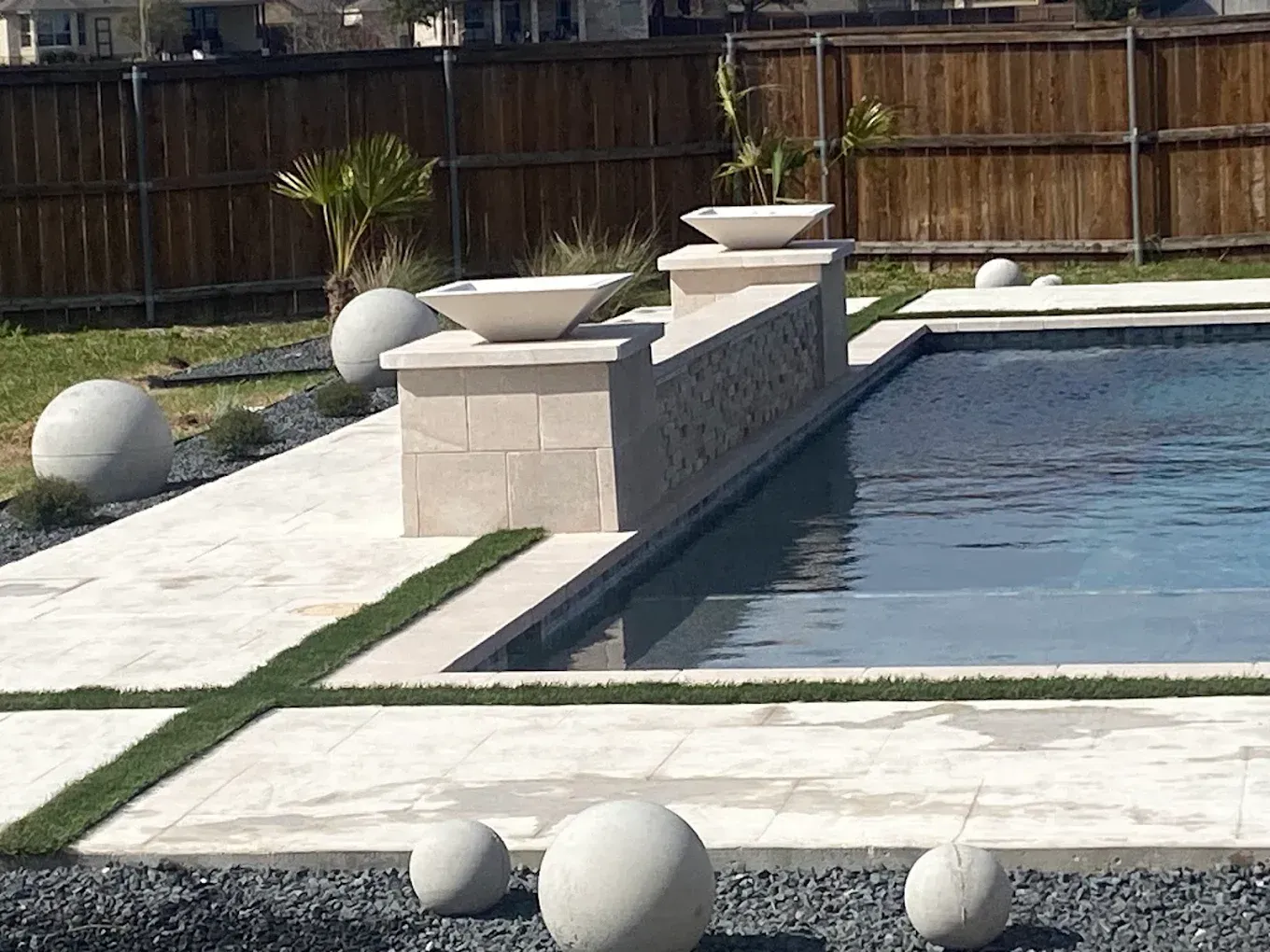
Hardscape That Expands Where You Gather
Patio Installation in Woodway for homeowners needing defined outdoor entertaining areas and expanded usable space
Yards without defined gathering areas force outdoor furniture onto grass that turns muddy during rain or becomes uneven as soil settles, limiting when and how you can use the space. Patios provide stable surfaces for seating, dining, and entertaining that remain accessible regardless of weather and integrate with landscape features like walkways, retaining walls, and lighting. Landscaping & More designs and builds patios in Woodway using materials selected to complement existing architecture while providing durability for long-term outdoor use. Projects range from small entry patios to large entertainment spaces that connect to pool areas or outdoor kitchens.
The process involves site evaluation to determine grading requirements and drainage paths, base preparation with compacted aggregate to prevent settling and cracking, and material selection based on aesthetic preferences and how the space will be used. Pavers, natural stone, and stamped concrete each offer different maintenance requirements and visual characteristics that affect both installation cost and long-term appearance.
Discuss custom patio ideas and project goals to create outdoor living areas that match how you use your property.
What Proper Base Preparation Prevents
Base work includes excavating to proper depth based on material type, installing compacted aggregate in layers to create a stable foundation that resists settling, and establishing drainage slope away from structures to prevent water pooling on the patio surface. Without adequate base depth and compaction, patios develop low spots where water collects, pavers shift and create tripping hazards, and cracks form in concrete surfaces as soil underneath settles unevenly during rain saturation and drying cycles common in Central Texas.
After completion, you'll have a level outdoor space that stays dry and accessible during rain, furniture that sits stable without rocking on uneven ground, and a defined area that organizes outdoor activities and separates them from lawn zones. The patio surface handles foot traffic without developing ruts or soft spots, and materials age consistently across the entire installation rather than showing localized wear from drainage problems or base failures.
Patios combine with additional features like fire pits, built-in seating, and landscape lighting to create functional outdoor rooms. Material choices affect both appearance and performance—pavers allow individual replacement if damage occurs, natural stone provides unique coloring and texture, and stamped concrete offers custom patterns at lower cost but requires sealing to prevent staining and surface degradation.
What Homeowners Want to Know About Patios
Questions typically focus on material selection, size considerations, and how design choices affect usability and maintenance.
What determines patio size and shape?
Size is based on how many people you want to accommodate, what furniture or features will be included, and available yard space, with shapes designed to complement home architecture and connect naturally to doorways or existing walkways.
How do material choices affect patio performance?
Pavers resist cracking better than concrete and allow repairs by replacing individual pieces, natural stone withstands temperature changes without expansion issues but costs more and requires irregular fitting, and stamped concrete provides custom appearance at mid-range cost but can crack if base preparation is inadequate.
What base depth is required for stability?
Most patios require four to six inches of compacted aggregate base, with deeper excavation needed in clay soils that expand and contract with moisture changes, ensuring the base remains stable through seasonal ground movement typical in Woodway.
When should drainage be addressed during installation?
Drainage planning happens before excavation begins, with grading designed to direct water away from the patio and adjacent structures, preventing runoff from landscape areas above the patio from flowing across the surface or undermining the base.
How does patio installation integrate with other landscape work?
Patios often connect with walkway installations for access paths, require coordination with irrigation systems to avoid damaging lines during excavation, and can incorporate retaining walls where grade changes are significant or where raised planting beds border the patio edge.
Landscaping & More builds patios that increase outdoor functionality while complementing your home's style and landscape layout. Contact us to review material options and design possibilities that fit your property and entertainment needs.